



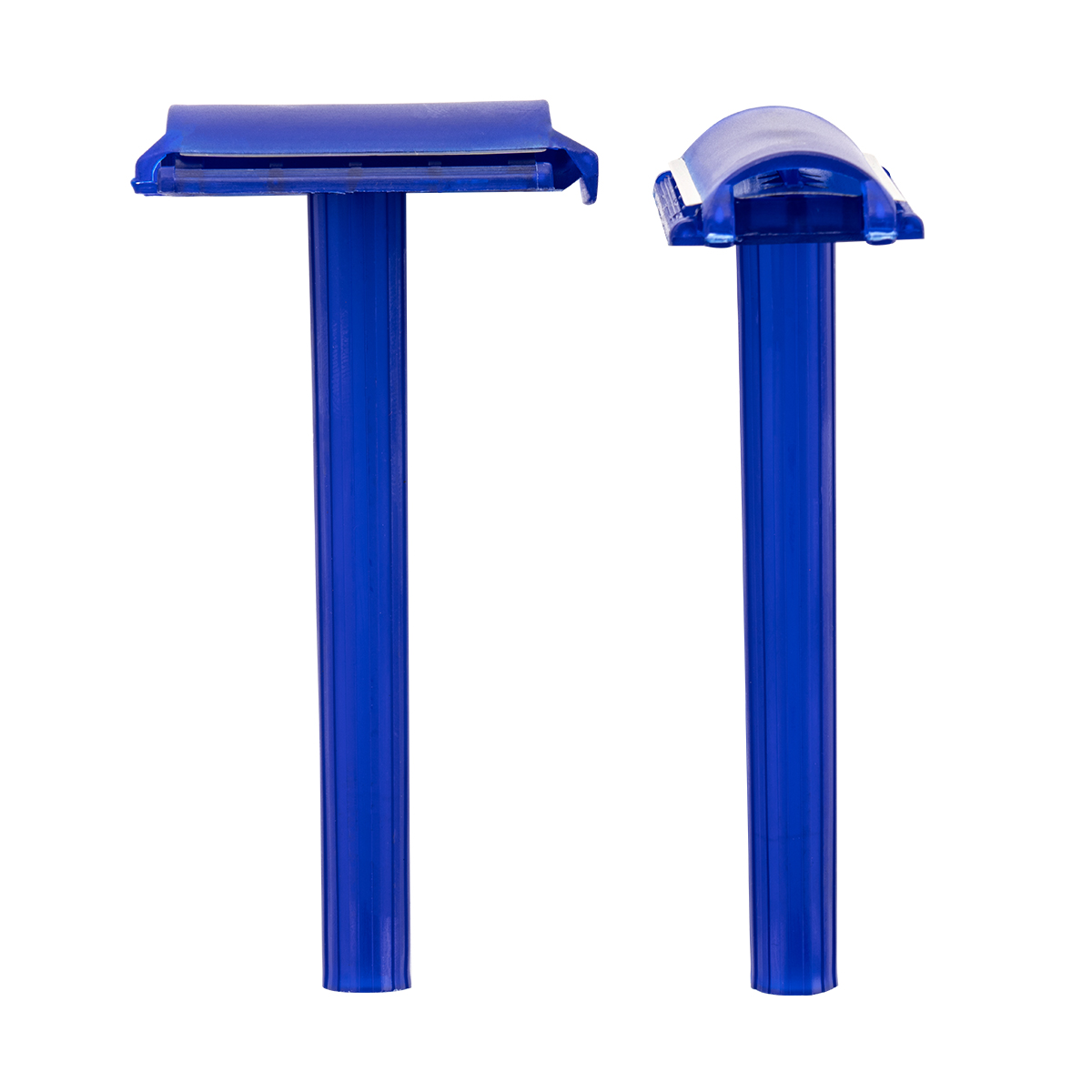
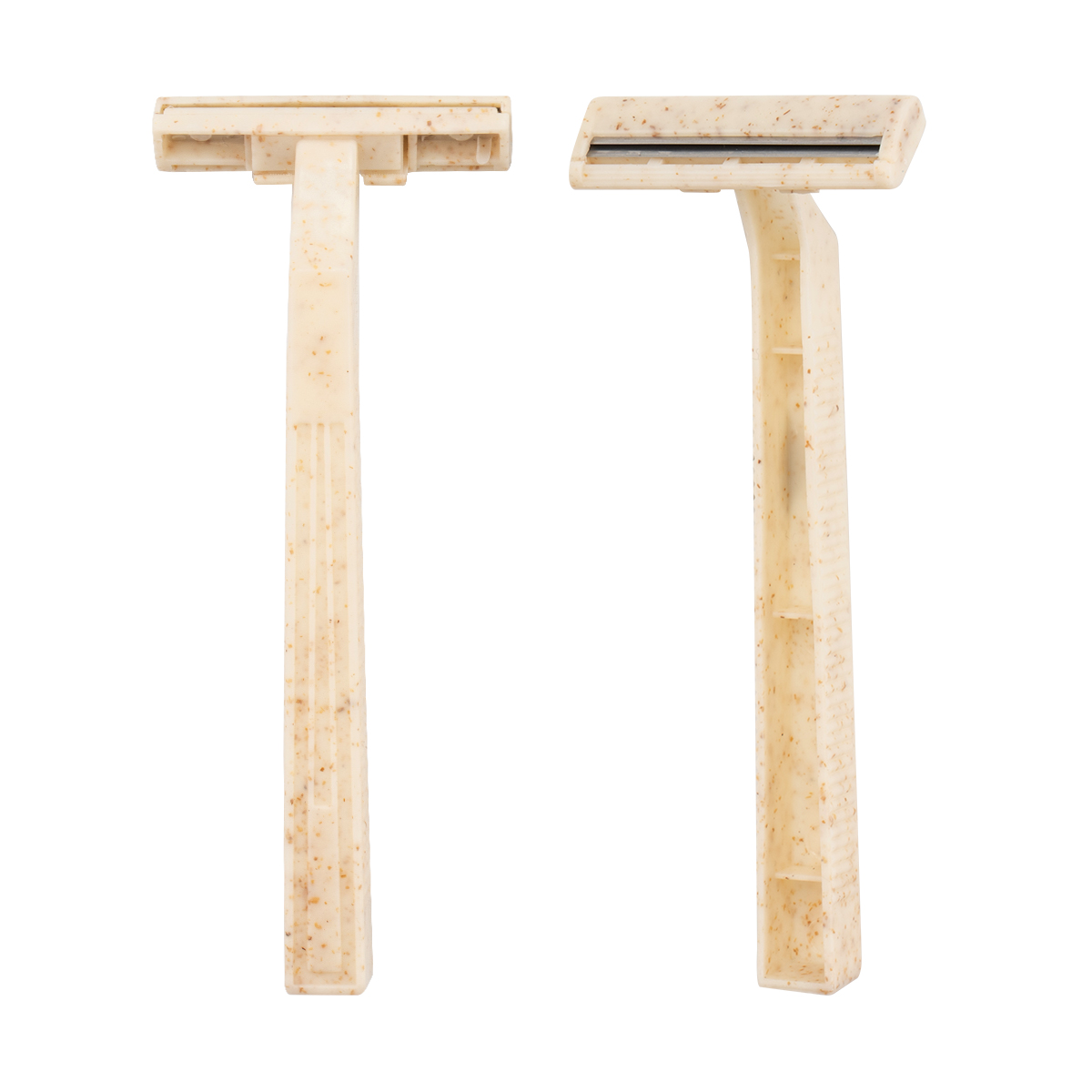
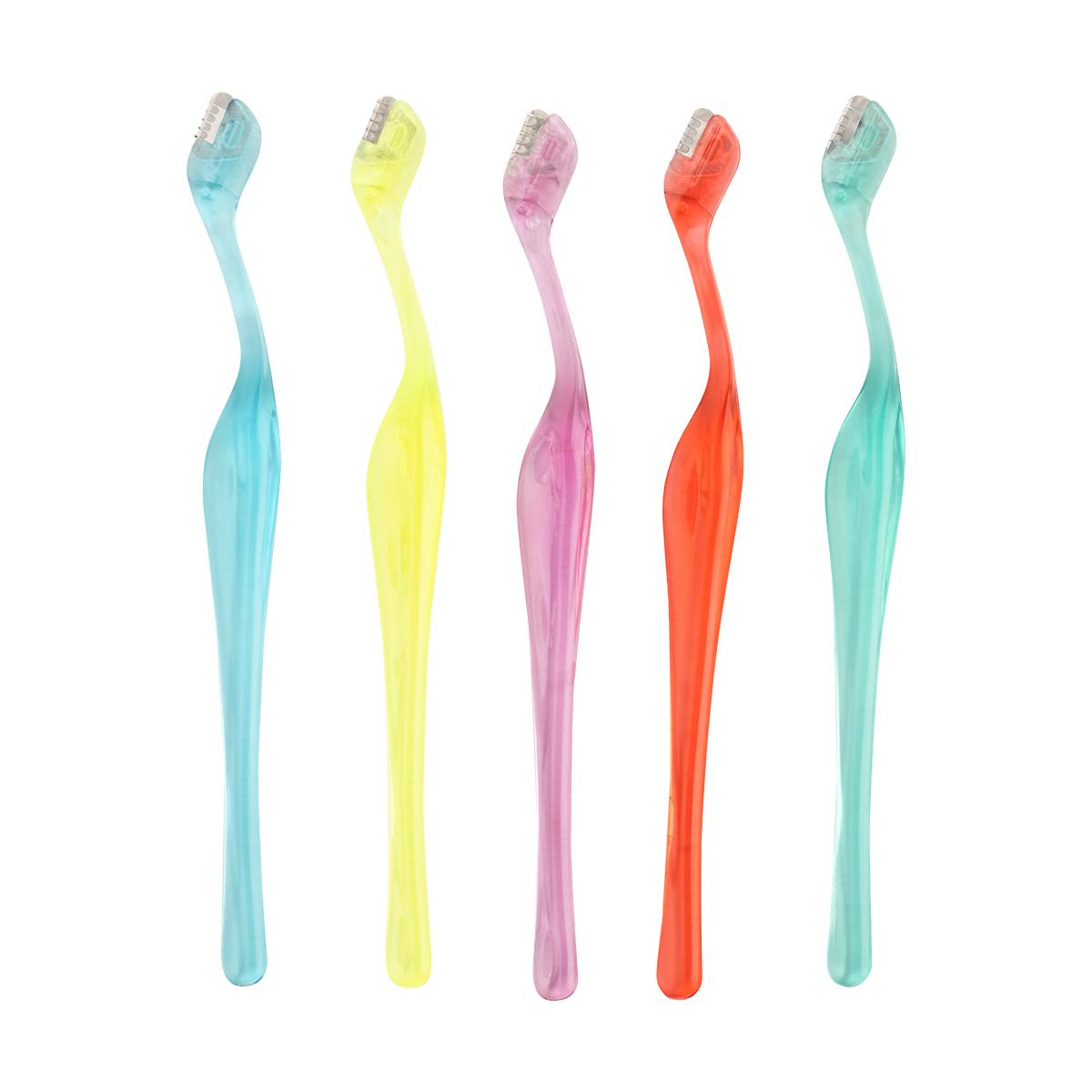

Suntem o întreprindere din industrie și comerț
Specializat în producerea de raze de unică folosință și cuțite de utilitate de mai bine de 30 de ani.

What Is a 2-in-1 Scraper Utility Knife and How Does It Work
A scraper knife looks simple from the outside, yet the working end of the tool carries more engineering decisions than most buyers ever notice. Blade angle, latch travel, plastic grade, and cartridge tolerance all decide whether a utility knife scraper glides across a window without a mark or leaves a hairline scratch on the first pass. This section walks through the build of a compact 2-in-1 scraper utility knife, the material choices behind different scraper blades, and the production details that separate a tool that lasts a season from one that lasts for years. It also answers the practical questions a buyer typically asks before choosing between a metal edge, a plastic edge, or a razor-style blade for a specific job.
Anatomy of a 2-in-1 Scraper Utility Knife
A folding scraper knife is built around four working parts, and each one has a direct effect on cutting comfort, blade life, and user safety. The layout below breaks the tool down the same way a design engineer would read a component drawing, moving from the cutting edge down to the locking mechanism at the base of the handle.
Cutting Edge
Plastic Blade
The orange plastic blade sits at a fixed angle against the housing so pressure is distributed along the full edge rather than concentrated at one corner. Because the blade is polymer rather than steel, it removes adhesive, paint specks, and film residue from glass and painted surfaces without cutting into the substrate underneath.
Grip
Comfortable Handle
The body is molded with a concave palm rest and two side cutouts for the fingers, which keeps the wrist in a neutral position during long scraping passes. This reduces hand fatigue compared to flat-bodied scrapers that concentrate load on the thumb.
Safety
Blade Lock
A ribbed latch at the base of the handle holds the blade carrier in either the open or closed position. The lock resists accidental release during pressure strokes, which matters most when the tool is being pushed rather than pulled across a surface.
Access
Press-Open Housing
A single thumb press releases the carrier so a worn plastic blade can be swapped without tools. This is the detail that turns a disposable scraper into a tool with a genuinely long service life, since only the blade cartridge is consumed.
None of these four parts works well in isolation. A sharp blade mounted in a loose carrier will chatter across a surface instead of cutting cleanly, and a secure latch means little if the handle shape forces the user's wrist into an awkward angle after the first few strokes. The value of a 2-in-1 scraper utility knife comes from how these parts are tuned together, not from any single feature on its own.
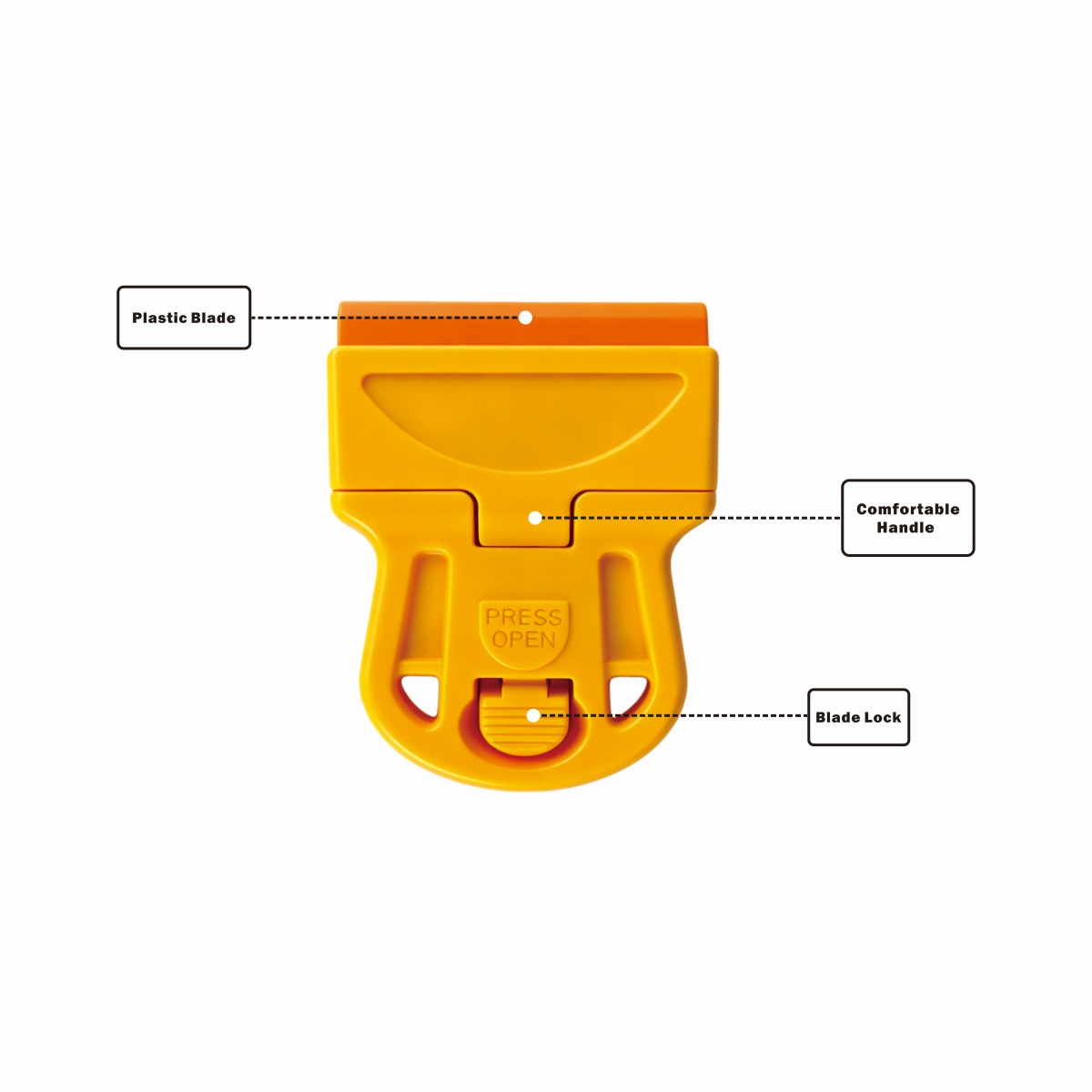
Component layout of a folding scraper knife: plastic blade, comfortable handle, and blade lock latch.
How the Press-Open and Press-Close Mechanism Works
The open and close cycle is the part of the tool that gets the most repeated stress over its working life, so the latch geometry is worth understanding before comparing products. The mechanism runs through two states, and each state is molded with its own labeled control so the action is intuitive without instructions.
- Press Open — the lower latch is pressed inward, releasing the carrier so the blade housing pivots forward and the plastic blade is exposed for scraping.
- Working position — the carrier seats against an internal stop, holding the blade at a fixed angle so stroke pressure does not change the cutting geometry mid-pass.
- Press Close — a second labeled button folds the carrier back into the housing, fully enclosing the blade edge for storage or transport.
- Locked storage — the closed housing has no exposed edge, which is the detail that makes the tool safe to carry in a drawer, apron pocket, or supply kit alongside other office or workshop items.
The internal stop referenced in step two is a small molded ridge rather than a separate metal part, which keeps the total component count low and removes a potential point of failure. Because the stop is part of the housing itself, the blade angle stays consistent even after hundreds of open-and-close cycles, whereas designs relying on a friction hinge alone tend to loosen with repeated use and allow the blade to drift out of position.
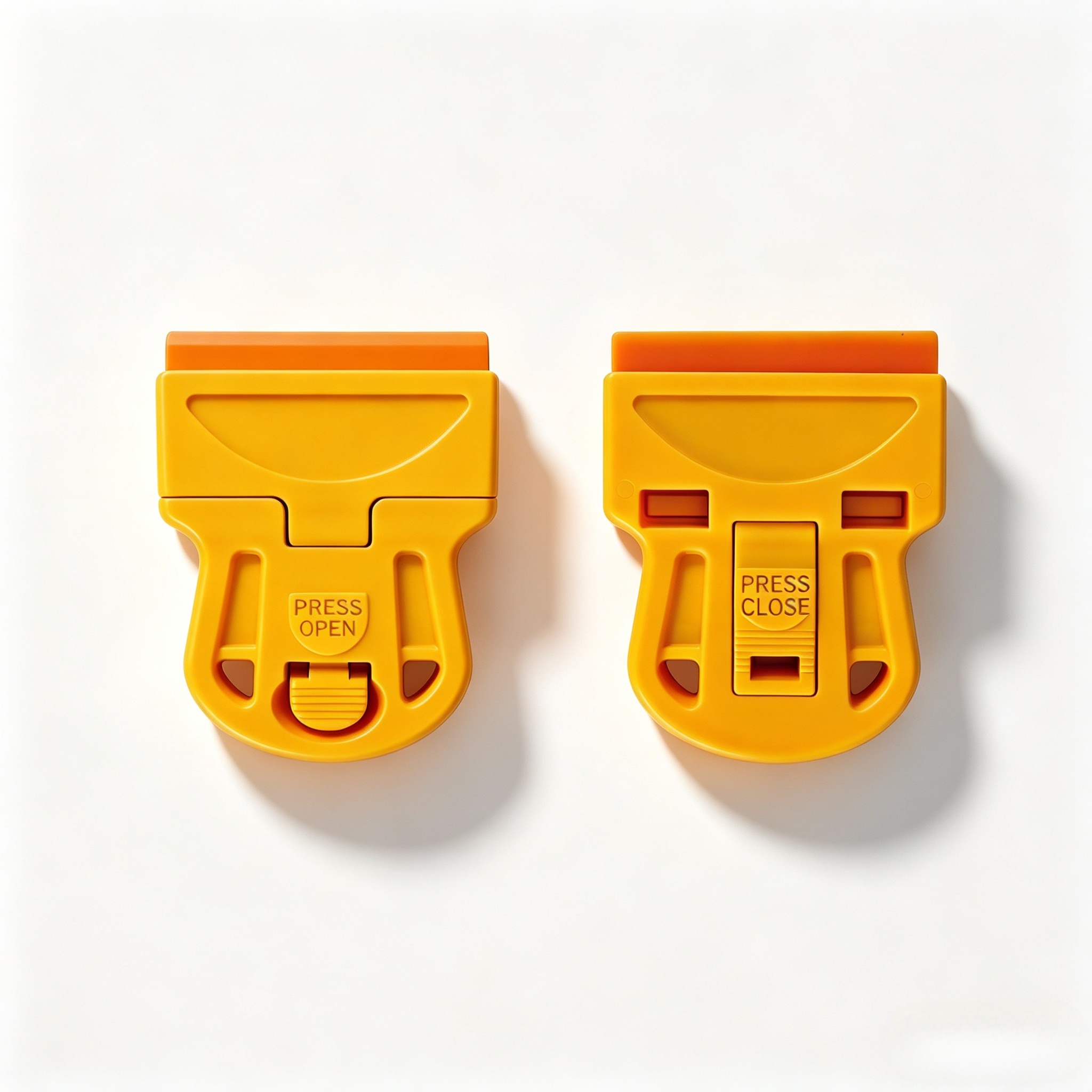
Left: carrier released in the press-open position. Right: carrier folded flat in the press-close position for storage.
Compact Dimensions Engineered for Precision Control
Scraper knives are generally produced in three broad size classes, and the class chosen for a given task changes both control and reach. A compact body around 4.1cm wide and 5cm tall keeps the tool inside a closed fist, which improves control on detail work such as corners, window frames, and small stickers, but trades away the reach of a longer-bodied scraper used for open wall or floor sections.
Body length also affects leverage. A short handle keeps the pivot point close to the wrist, which is an advantage for fine, low-pressure passes but a disadvantage when a job calls for sustained downward force, such as lifting set adhesive from a hard floor. Longer scrapers push the pivot point further from the wrist, trading fine control for mechanical leverage. Neither length is objectively better; the right choice depends on whether the job favors precision or force.
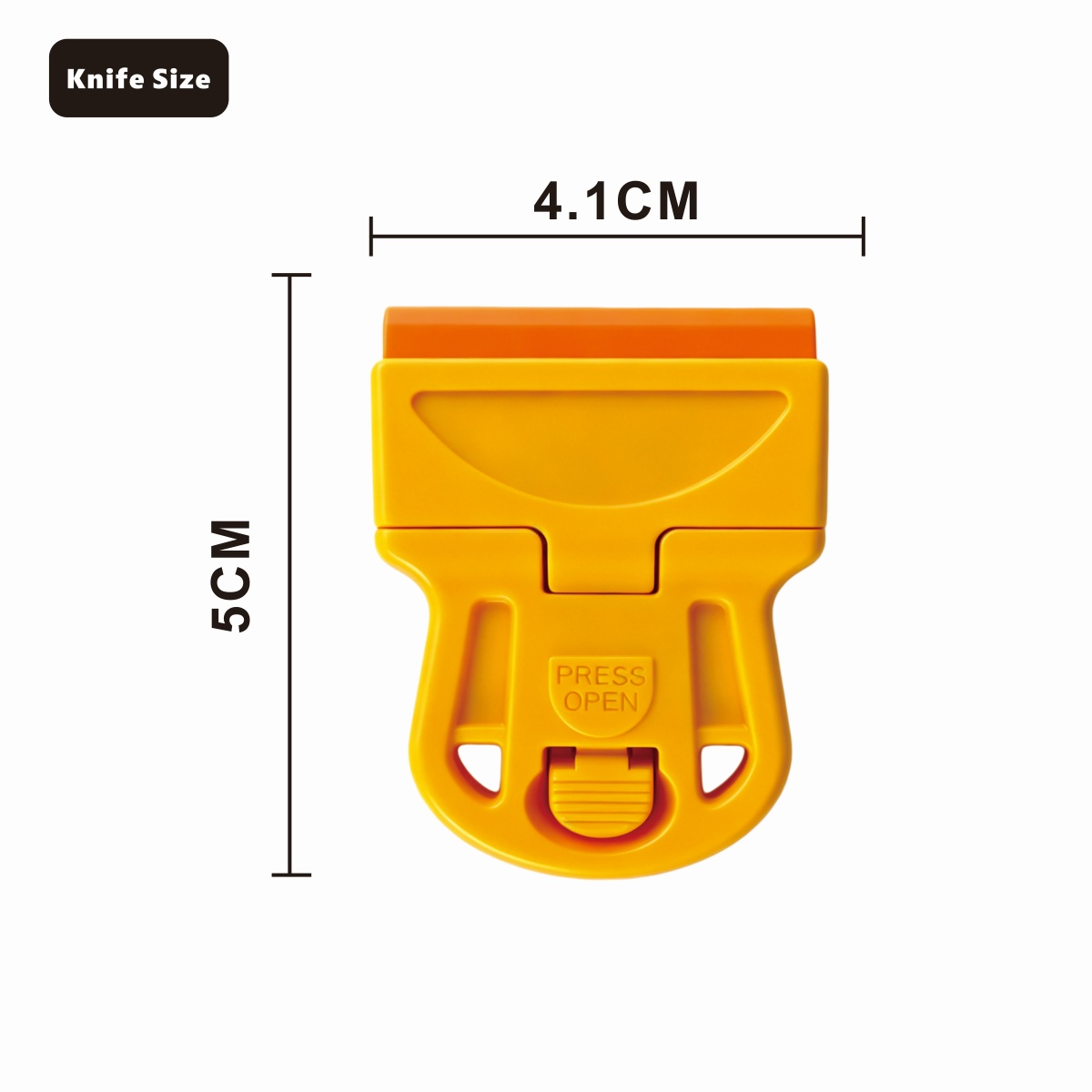
Compact scraper knife body: 4.1cm width by 5cm height, sized for one-hand control.
The chart below compares typical body length across the four common size classes used in scraper knife production, measured from the top of the blade to the base of the handle.
Approximate body length by scraper size class, shortest to longest.
A mini-class body, the category the 4.1cm by 5cm scraper belongs to, is best suited to pocket or desk-drawer storage and short, controlled strokes. Moving up to a standard or long-reach class trades that portability for coverage speed on larger flat areas such as wall sections or vehicle panels.
The Four Recognized Categories of Scraper Tools
Anyone comparing what tool to buy for a scraping job is really choosing between four families of scraper, each defined by its blade material rather than its handle shape. Knowing which family a job calls for prevents the two most common mistakes: using a blade too hard for the surface, or a blade too soft for the residue.
Metal Scraper
Built with a stainless or carbon steel edge, this is the hardest-wearing category and the one most often reached for on concrete, dried mortar, or old paint on wood and metal substrates. The trade-off is a real risk of scratching glass, gel-coat, or painted panels.
Plastic Blade Scraper
A polymer edge with a rounded profile, purpose-built for glass, ceramic tile, and automotive paint. It removes adhesive residue and film without the scratch risk of a metal edge, at the cost of being less effective on hardened deposits like set mortar.
Razor Blade Scraper
Uses a single-edge steel blade for maximum sharpness on very thin residues such as label glue, paint overspray dots, or decal film. The sharp edge that makes it effective also makes it the category that requires the most careful handling.
Multi-Purpose Scraper
Combines a folding utility-knife body with a replaceable blade cartridge, most often fitted with a plastic blade. This is the category the 2-in-1 scraper utility knife belongs to, built for users who want one compact tool to cover several light-duty jobs.
The four categories are best read as points on a hardness spectrum rather than as strictly separate product lines. A metal scraper sits at the hard end, suited to abrasion-resistant surfaces; a plastic blade scraper sits at the soft end, suited to finished and decorative surfaces; razor blade scrapers occupy a narrow, high-sharpness niche of their own; and multi-purpose scrapers exist specifically to let one handle move between tasks by changing only the cartridge.
Blade Material and Performance Comparison
The table below lines up the four scraper categories against the specifications that matter most when specifying a blade for a particular job: edge material, typical body size, best-suited surface, and relative scratch risk.
| Scraper Type | Blade Material | Typical Body Size | Best-Suited Surface | Scratch Risk |
| Metal Scraper | Stainless / carbon steel | 10cm – 30cm | Concrete, mortar, wood, painted metal | High |
| Plastic Blade Scraper | Engineering-grade polymer | 4cm – 12cm | Glass, tile, automotive paint | Low |
| Razor Blade Scraper | Single-edge carbon steel | Blade-only or short body | Thin labels, overspray, decal film | High |
| Multi-Purpose Scraper | Replaceable plastic cartridge | 5cm – 10cm folded | Glass, plastic trim, light adhesive | Low to medium |
Reading across the table, body size and blade hardness tend to move together: the categories built for demolition-style work are also the longest, since extra length supplies the leverage that a harder deposit requires. The two low-risk categories are shorter and lighter, reflecting their role in detail work rather than bulk material removal.
Surface Scratch Risk by Blade Type
Scratch risk is the variable buyers underestimate most often, because a blade that performs well on a durability test can still be the wrong choice for a delicate surface. The chart below scores each blade family on relative scratch risk to finished glass and painted panels, on a simple low-to-high scale.
The gap between the two highest-risk categories and the two lowest-risk categories is wide enough that surface type should usually decide the purchase before price, body size, or brand of latch mechanism enter the decision. A metal or razor blade removed from the wrong surface even once can leave a mark that is far more expensive to repair than the residue it was meant to clear.
Application Scenarios Across Surfaces and Tasks
The best tool for a scraping job is rarely a single universal blade; it is the blade matched to the surface underneath the residue. A plastic-bladed scraper knife earns its place in a supply kit by covering the surfaces where a metal edge is the wrong answer.
Window and Glass Cleaning
Paint overspray, tape residue, and price stickers come off glass cleanly because the rounded plastic edge rides flat against the pane instead of catching on the surface.
Wall and Tile Cleaning
Old wallpaper edges, double-sided tape, and adhesive putty lift away from painted drywall and ceramic tile without gouging the finish underneath.
Label and Film Removal
Shipping labels, price tags, and protective film on new appliances or electronics release cleanly with a flat, angled push stroke.
Coated Surface Clearing
A flat, blunt-edged blade is also the correct tool for clearing a soft latex coating from a printed card surface, since a sharp edge would cut through the print layer underneath instead of lifting only the coating.
Across all four scenarios above, the failure pattern is the same when the wrong blade is used: a metal or razor edge cuts fractionally too deep, marking or tearing the layer beneath the residue rather than lifting the residue alone. A plastic blade set at a shallow, fixed angle removes that risk almost entirely, which is why it is the standard choice for detail work on visible, finished surfaces.
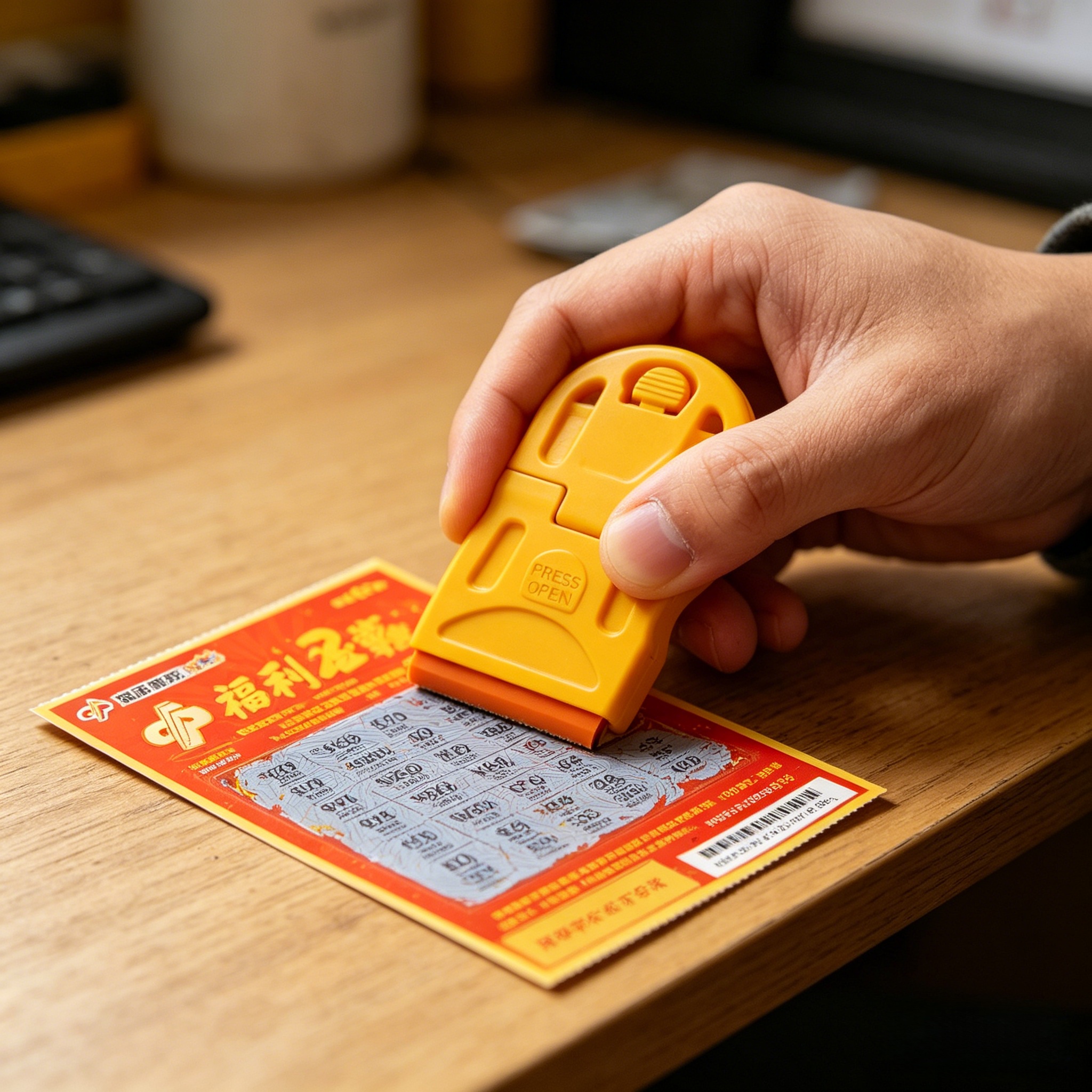
A flat plastic blade clears a soft coating layer without cutting into the printed surface beneath it.
Manufacturing Standards Behind Scraper Knife Production
A scraper knife that survives daily use is the result of decisions made at the mold and material stage, not just at final assembly. The housing is typically produced from an engineering-grade ABS or PP blend chosen for impact resistance, since the handle absorbs repeated drop and grip stress that a brittle plastic would eventually crack under. Wall thickness around the latch pocket is held to tighter tolerance than the rest of the housing, because this is the zone that carries the most repeated flex over the life of the blade lock.
The plastic blade itself is molded from a stiffer, more wear-resistant polymer than the housing, with the cutting edge finished to a consistent radius so scraping pressure is spread evenly rather than concentrated at a single point. Cartridge tolerance is checked so a replacement blade seats at the same fixed angle as the original, keeping scraping performance consistent across the life of the tool rather than only on the first blade.
Where a product line also offers a metal or razor cartridge for the same handle, the steel is typically specified separately from the plastic-blade version, since a scraping edge and a cutting edge call for different heat treatment. A softer, tougher steel resists chipping during scraping strokes, while a harder, more brittle steel holds a finer edge for thin-film removal but chips more easily if used against a hard, unexpected surface.
Before a design is approved for production, the latch mechanism is cycle-tested through repeated open and close actions to confirm the blade lock continues to hold securely well beyond ordinary household or workshop use, and the housing is drop-tested to confirm the latch does not release on impact. Color consistency between the handle, the carrier, and the blade is checked under the same lighting used on the retail packaging photography, since a visible color mismatch between production batches is one of the more common reasons a shopper hesitates at the shelf.
Retail-Ready Packaging Designed for Shelf Performance
Packaging carries almost as much of the buying decision as the tool itself, particularly for a product category where the shopper is comparing several similar-looking scrapers on the same shelf. A clear blister pack keeps the plastic blade, handle, and blade lock all visible before purchase, which answers the two questions a shopper asks first: what does the blade look like, and how does the tool open.
Use-case labeling printed directly on the card, such as window cleaning and wall cleaning icons and text, lets a shopper identify the right product for their task in a few seconds rather than reading a full description. A hang-tab at the top of the card supports standard pegboard and hook display, while the flat card back leaves room for barcode, size, and material specification printing without covering the visible product window.
Card stock weight and blister thickness both affect how the pack survives repeated handling on an open shelf, since a scraper knife is a product shoppers frequently pick up to test the latch action before buying. A card that flexes or a blister that clouds after a few handling cycles undermines the same premium impression the packaging graphics are designed to build.
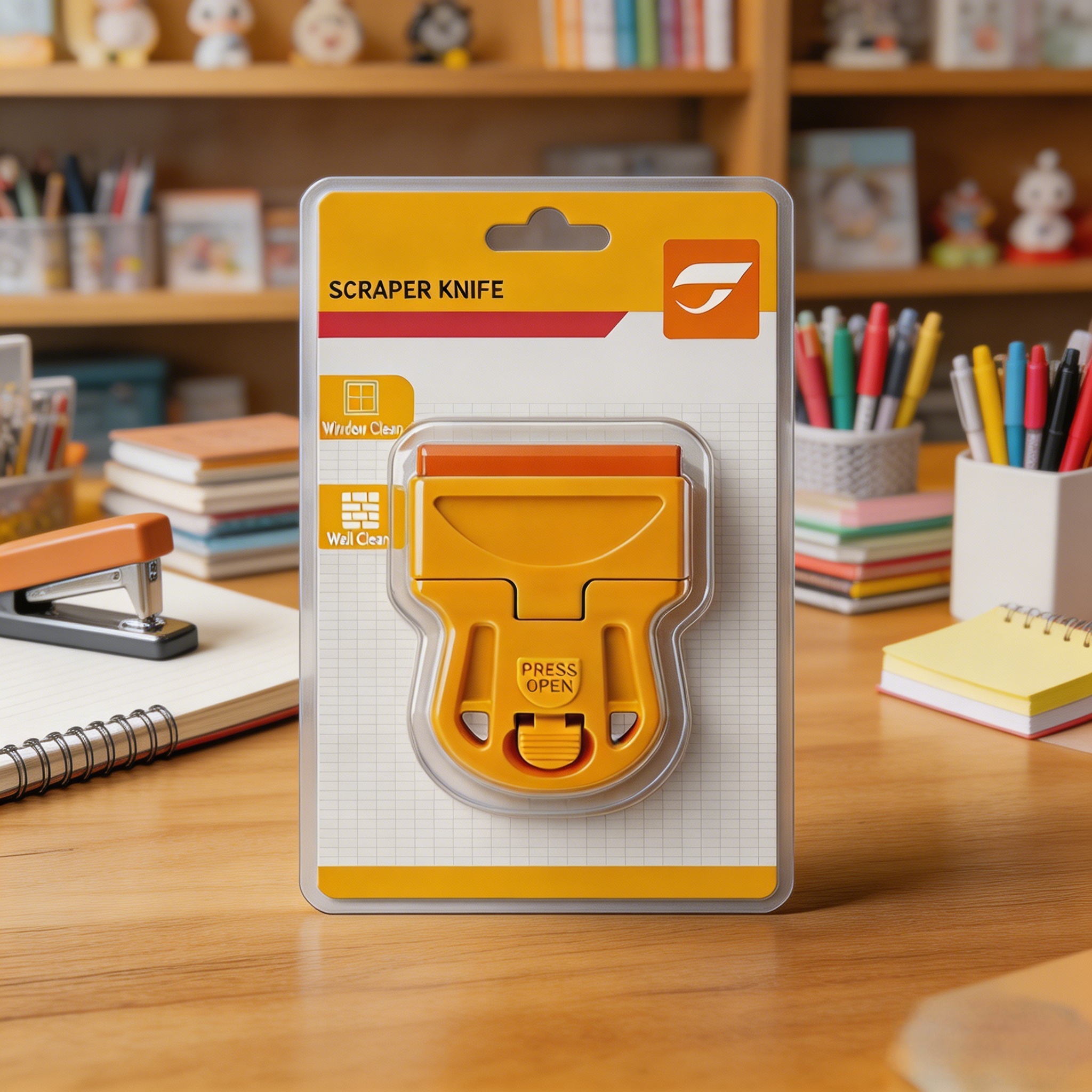
Blister packaging with a visible product window and printed use-case labeling for window and wall cleaning.
Common Questions About Scraper Knives and Scraper Blades
The questions below come up repeatedly when a scraper knife is being specified for a new task, and each one is answered separately here because the correct answer changes depending on the surface, the residue, and the working environment.
What is a utility knife that can also be used as a scraper?
It is a folding hand tool built with a flat, angled edge in place of a pointed cutting blade, housed in the same style of body as a standard utility knife. Instead of piercing or slicing material, the edge is pressed flat against a surface and pushed forward to lift residue, which is why the category is described as a scraper rather than a knife even though the housing and latch design come directly from utility-knife engineering.
What is a 2-in-1 scraper utility knife?
This term describes a single handle designed to accept more than one blade type through a replaceable cartridge, most commonly switching between a plastic scraping blade and a steel cutting or razor blade. The "2-in-1" description refers to the handle serving two functions, not to two blades being fitted at the same time, and it is the reason this category sits between a dedicated scraper and a dedicated utility knife on a hardware shelf.
What are the four types of scrapers?
Scrapers are generally grouped by blade material into metal scrapers, plastic blade scrapers, razor blade scrapers, and multi-purpose scrapers with replaceable cartridges. The full comparison of these four categories, including body size and scratch risk, is set out earlier in this section for anyone specifying a blade for a particular surface.
What is the best tool for scraping?
There is no single best tool across every surface; the correct choice depends on the hardness of the residue and the hardness of the surface underneath it. A plastic blade scraper is the safer default for glass, tile, and painted panels, while a metal scraper is the more effective choice for concrete, mortar, and bare wood where scratch risk is not a concern.
What can be used instead of a traditional metal scraper?
On surfaces where a metal edge carries too much risk, common alternatives include a plastic blade scraper, a stiff plastic putty knife, or a combination of gentle heat and a soft cloth to loosen adhesive before it is lifted by hand. Chemical adhesive removers paired with a plastic blade are also a common substitute where mechanical scraping alone would need excessive pressure to clear the residue.
What are the different types of scraping as a process?
Beyond blade type, scraping itself is carried out in several distinct ways: dry scraping with no lubricant, wet scraping where water or solvent softens the residue first, heat-assisted scraping where gentle warmth loosens adhesive before the blade is used, and chemical-assisted scraping where a solvent is applied and allowed to dwell before the blade removes the softened layer.
What is another name for a scraper?
Depending on the surface it is designed for, a scraper is also commonly called a paint scraper, a glass scraper, a window scraper, or a flat scraper, and a folding version with a replaceable cartridge is often referred to simply as a scraper knife.
What is a metal scraper called?
A metal-bladed scraper is most often called a steel scraper or paint scraper, and in trades where it is used specifically for surface preparation before painting or coating, it may also be referred to as a surface scraper.
What are the different types of scraper blades?
Blade edge geometry varies almost as much as blade material: straight-edge blades for flat, even surfaces, angled or beveled blades for reaching into corners, hook-style pull blades for drawing residue toward the user rather than pushing it away, and double-edge safety blades that can be flipped once one side dulls, extending the working life of a single cartridge.
Selecting the Right Scraper Blade for a Given Task
Matching the blade family to the surface is the single decision that determines whether a scraping job finishes clean or finishes with damage that takes longer to fix than the residue did. The checklist below breaks the choice down into the four questions worth asking before picking up any scraper.
Check the Surface First
Glass, gel-coat, and finished paint call for a plastic blade. Concrete, mortar, and bare wood can take a metal edge without cosmetic concern.
Match Blade to Residue Thickness
Thin films and label glue respond best to a sharp razor-style edge; thicker, set deposits need the leverage of a longer metal scraper.
Consider Working Space
Tight corners and small components favor a compact folding body; open wall or floor areas are faster to clear with a longer-bodied scraper.
Plan for Blade Replacement
A press-open cartridge design means a dulled plastic blade can be swapped in seconds, keeping the same handle in service across many blade cycles.
Working through these four questions in order, before a blade is chosen rather than after a surface has already been marked, is the most reliable way to get a clean result on the first pass rather than needing a second, more careful pass to correct a mistake made by the wrong edge.
Știri recomandate

Păstrăm legătura
 Nr. 2-2, Oufu Road, Zhangting Town, Yuyao City, Ningbo City, Zhejiang, China.
 +86-574-87560886/87560055
 +86-574-87560885
Copyright © Ningbo Chuangxin Cutting-Tool Manufacture Co., Ltd.
